Last updated: August 14, 2026
Code RED Newsletter #35
We're back, and a lot happened while we were away. The out-of-office auto-reply is finally off, the batteries are properly recharged, and I'm genuinely glad to be here - there is nothing like a few weeks away from the keyboard to remind you why you liked this stuff in the first place.
The ecosystem, meanwhile, took no such break. You come back expecting a quiet backlog and instead find OpenTelemetry had its most productive month in years - nine blog posts, a stable release closing the last real gap in zero-code instrumentation, a demo deliberately broken and rebuilt around agents, and a spec that quietly grew a fourth signal. Nobody sends a push notification when the foundation finishes setting. You just come back and find the concrete has cured.
So: the catch-up issue. Everything below landed over the past six weeks, so if you also spent the summer pretending Slack doesn't exist, you've missed none of it.
In focus: The Loop Closes
The first half of 2026 was spent asking whether agents could write the software. That question is settled enough to be boring. What July did - across the OpenTelemetry project, an analyst firm, two very large engineering organizations, and us - was move it up a layer: now who watches what the agents wrote?
And the answer that keeps coming back, from people with no reason to coordinate, is that it isn't a model problem. It's a foundation problem. So let's start with the least glamorous item in the pile, which is an important one.
One-Command OpenTelemetry on Linux Hosts
You can now run apt install opentelemetry. Or yum, if that's your church. The Packaging SIG's (including Michele Mancioppi) first repository bundles the Injector with SDKs and auto-instrumentation for Java, .NET, Node.js and Python - install, point the config at an endpoint, restart your processes, go home. If you've ever walked a team through the getting-started guide and watched their enthusiasm drain somewhere around step nine, you'll appreciate what just happened here: OpenTelemetry stopped being something you integrate and became something you install. Not glamorous. Absolutely load-bearing for everything else in this issue.
Go Compile-Time Instrumentation Hits v1
Go developers have spent years watching the Java crowd get free instrumentation like it was a party they weren't invited to - and for good structural reasons, since there's no runtime to hook and no bytecode to rewrite. The new otelc tool solves it at the only seam left: swap go build for otelc go build and the toolchain instruments your application and its dependencies on the way past, no agent, no sidecar, no privileged anything. The part I'd actually frame, though, is the governance - Alibaba and Datadog each shipped competing implementations in 2025, and rather than handing us two ecosystems and a lock-in decision, both got upstreamed into one project now maintained by Datadog, Alibaba, Quesma and Cabify.
We Broke the OTel Demo
There is something deeply reassuring about a project that ships breaking changes and names the blog post after it, rather than burying them in paragraph nine of a migration guide. Demo 3.0 now runs a full agentic stack - a LangGraph agent, an MCP server exposing the demo's own capabilities as tools, a chatbot UI - with tracing running chatbot to agent to MCP to microservices, catching every tool call and reasoning step on the way. It also includes the new gen-ai normalizer processor, which converts Traceloop and OpenLLMetry telemetry into proper gen_ai.* conventions; two issues ago I called Arconia's convention-switcher a clever band-aid on a real wound, and here's the wound getting treated upstream. Every "how to observe your agents" think-piece this summer, and this is the one you can actually docker compose up.
Observability Trends in Platform Engineering
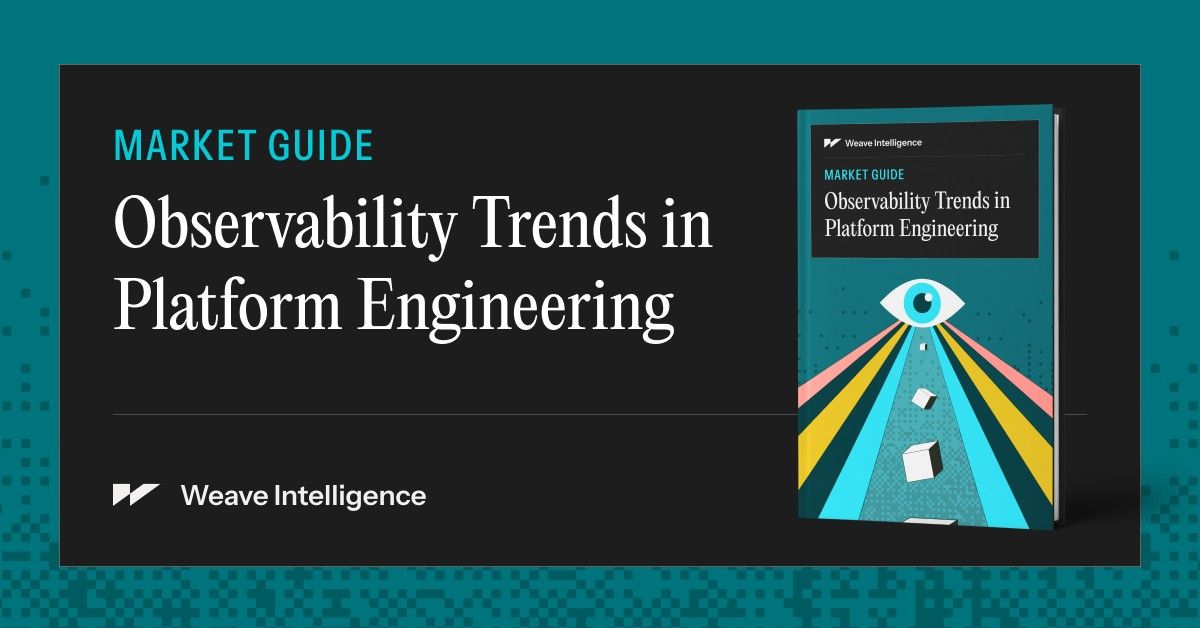
Every so often something lands that says the thing you've been saying, except with a methodology section. Weave Intelligence - the independent platform-engineering analyst firm run by Luca Galante, who you may also know as the person behind PlatformCon - published a market guide built on practitioner data and expert interviews, and the finding I'd hang on the wall is that OpenTelemetry is the foundation for AI-ready systems specifically because semantic conventions make telemetry interpretable by machines. There's a sharp point on cost too: AI workloads break traditional telemetry budgeting, so control has to move to the pipeline layer and be there before production, not bolted on after the invoice arrives. I argued a version of the first one at PlatformCon in June, so season with salt to taste - but a practitioner asserting something on a stage and an analyst firm finding it in survey data are different animals.
Instacart Built Blueberry, and Published the Numbers
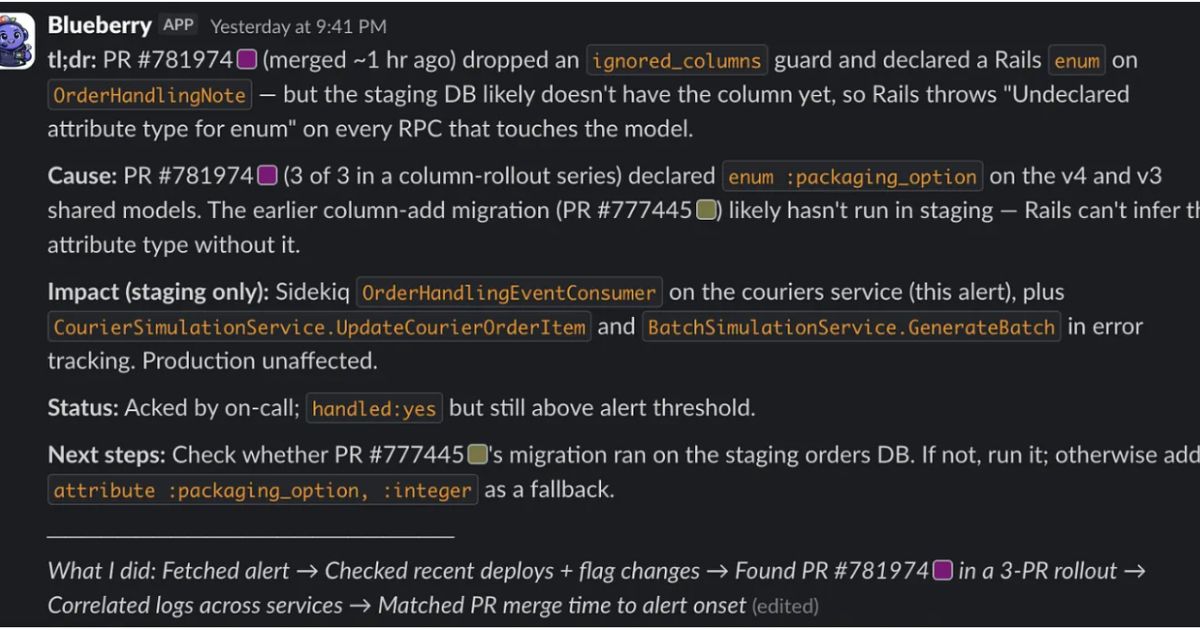
An end-user report with real figures in it, which right now is rarer than a quiet Friday deploy. When an alert fires, roughly ten Blueberry subagents launch in parallel - either a swarm or a small consulting engagement, depending on your billing model - and land root-cause hypotheses in Slack inside three minutes; April alone saw ~25,000 diagnostic passes across 270-plus channels. But here's the number: diagnostic accuracy went from the mid-60% range to the high-90s, and Instacart credits that jump to grounding the thing in fourteen years of incident history, ownership data and internal docs. Not a better model. Better context. If you want one production data point for why the boring convention work is the moat, it's this one.
Beyond Observability, and What Came Out of the Dark
The thing I couldn't tell you about last issue - and fair warning, this is the Dash0 block. Mirko's post names the problem "Acceleration Whiplash": AI writes code at machine speed while production is still run at human speed, and the Faros AI numbers he cites are properly uncomfortable - task throughput up 34%, code tasks up 210%, incidents up 243%, review times up 442%. Out of that came SignalStore, keeping all four signals in open formats behind two front doors (QL and dashboards for humans, MCP and API for agents), and Darkplane, which points observability at the AI coding process itself. Ben Blackmore's companion post supplies the best artifact of the launch - six levels of agentic software engineering, with Darkplane planted at level 3.5, because 4 would have been a nicer number and a worse answer - and the first piece is already shipping as AI Coding Insights, which I wrote up with Mauricio Salatino. Nobody agrees what AI coding should cost - NVIDIA says $250K per engineer per year, Meta reportedly burns $900M a month on tokens, Salesforce capped Claude Code and then uncapped it - and not one of them can tell you what the money bought. That's not a spending problem, it's a measurement problem.
Hear the story on the Code RED Podcast
Code RED Podcast #47: Platform Engineering Was Never Just About Kubernetes
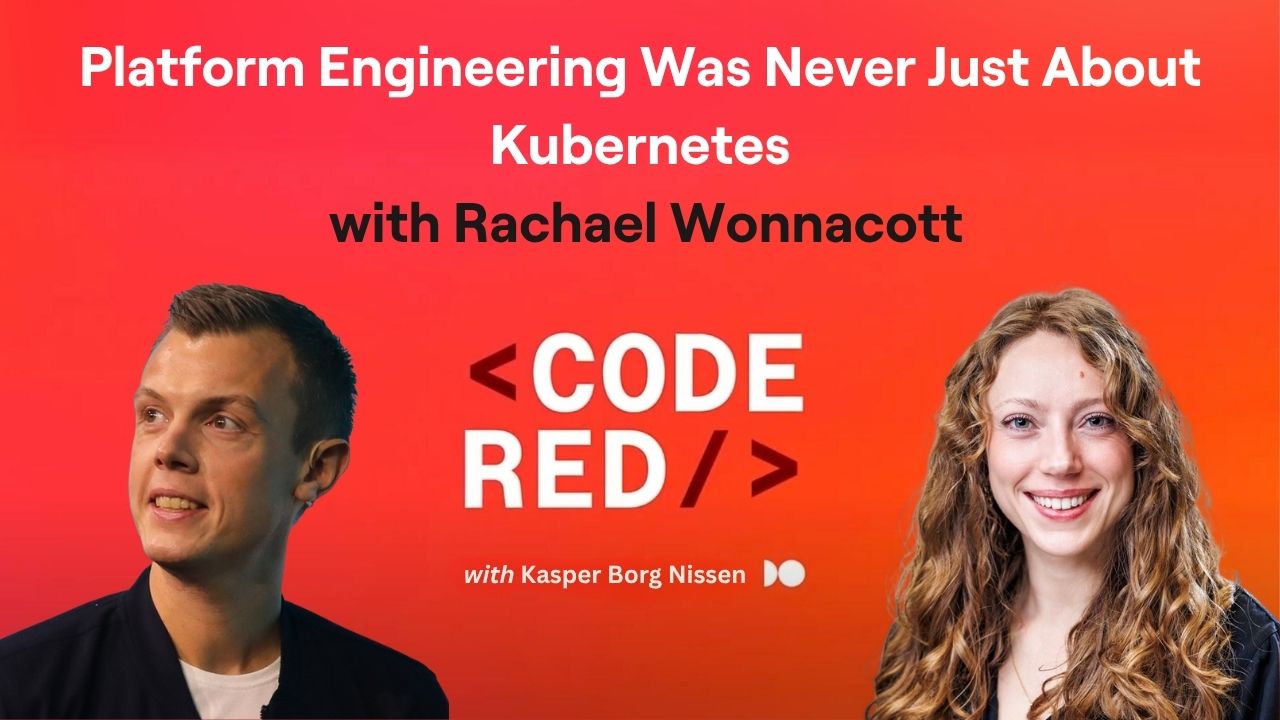
I hosted this one, and it's the right place to land the issue. Rachael Wonnacott's argument is that great platforms are defined by the experience they create, not the infrastructure underneath - and that a badly drawn abstraction doesn't become a paved road, it becomes a fence. We got into the cognitive-load trade every platform team eventually meets, where making life simpler for developers just relocates the complexity onto your desk, which is either the job or the curse depending on the week. The thread back to everything above: platforms are now also in the business of handing agents the architecture, constraints and telemetry they need to decide well. Instacart proved that with fourteen years of incident history. Rachael explains why serving it up is the platform's job.
Choice cuts
Six weeks away means a deeper cutting-room floor than usual. Pour yourself something cold, put the laptop somewhere shady, and enjoy the last of the slow season.
Expedia's STAR Took the Opposite Bet
The counterweight to Blueberry, and arguably the better engineering story. STAR is a deterministic workflow rather than an agent - telemetry in, LLM analysis via prompt chaining, consolidation, report out - and Expedia deliberately left out function calling, RAG, memory and autonomous tool use, which in August 2026 is practically a protest movement. One team went as agentic as it gets, the other refused on principle, and both landed on exactly the same line: AI investigates, humans decide.
The Backbone Kept Hardening
While everyone argued about agents, the unglamorous work shipped on time. Spec v1.59.0 gave Profiles a formal data model - the fourth signal is now a real thing with paperwork, not a promising rumour - and merged the Policies OTEP, while Semantic Conventions v1.43.0 pushed CI/CD, VCS and process conventions to release candidate. That last pair is quietly the most relevant thing here: they're what makes correlating a code change to its production behaviour possible without a vendor sitting in the middle.
Read the semconv release notes
See Every Lambda Invocation, Even the Ones That Never Finish
Ours, and a merciful break from the agent talk. Timeouts and OOM kills die before they can emit anything, so conventional tracing never sees them - the invocations you most want to look at are precisely the ones that leave no note. Synthesizing a trace from the Lambda Telemetry API for exactly those is the kind of gap-filling that only occurs to someone who has been paged about it personally. Trace propagation holds across SQS, SNS, EventBridge and Kinesis too, so a publish-and-trigger pair shows up as one connected trace instead of two orphans staring at each other.
Ruby Went From Neglected to Spoiled in Four Weeks
Also ours, and a neat bookend to the packaging story up top. The Dash0 Operator now auto-instruments Ruby 3.3+ on Kubernetes - Rails apps, Bundler-managed services and plain scripts - by injecting the OpenTelemetry Ruby distribution at container startup, with no manual SDK wiring. The detail I like is the graceful bit: it sniffs the Ruby version at startup and quietly deactivates itself on older runtimes, so you can roll it across a mixed cluster without playing version whack-a-mole. It's opt-in for now behind a Helm flag.
Auto Mode, Now the Default
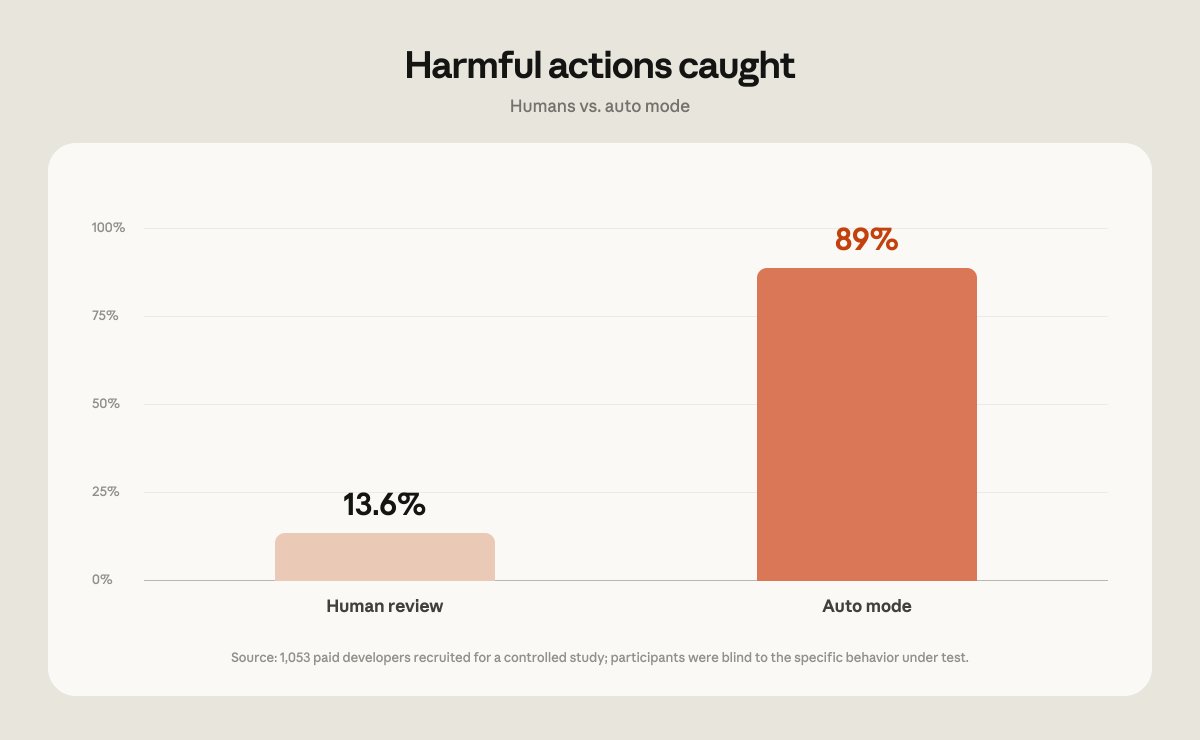
The New Stack reports Auto Mode is becoming the default in Claude Code, under the gloriously blunt headline "because humans can't be trusted." Filed here half for the headline and half because it's this issue's argument arriving from the opposite direction: the industry's collective answer to autonomy is "let it run, but watch it." Which only works if the watching part is real.
What I keep turning over is how little coordination there was in any of this. The Packaging SIG wasn't thinking about Instacart. Expedia wasn't reading Weave Intelligence. Nobody scheduled the OTel Demo to ship a gen_ai.* normalizer the same month an analyst firm concluded that semantic conventions are what make telemetry legible to machines. It all pointed the same way at once, which is usually the sign that something has stopped being a prediction and started being the weather.
And the shape is the same as last issue, just with better evidence behind it. Instacart didn't reach the high-90s with a cleverer model, they got there with fourteen years of context. Expedia got results by removing autonomy, not adding it. The zero-code gap closed because two competitors upstreamed instead of forking. None of that is a model story - and the foundation underneath all of it now installs from a package manager.
Until next time: install the packages, ground your agents in something real, and may your overflow boolean stay false.
Kasper, out!
Hi, my name is Kasper!
I'm Kasper Borg Nissen, Director of Developer Relations at Dash0. I'm passionate about Observability and bridging the gap toward developers through Platform Engineering. I've previously worked 8 years as a platform engineer, I'm a former co-chair of KubeCon+CloudNativeCon, and I'm genuinely obsessed with all things cloud-native and open standards.