Runtime Metrics
Find the runtime bottleneck behind "Python is slow"
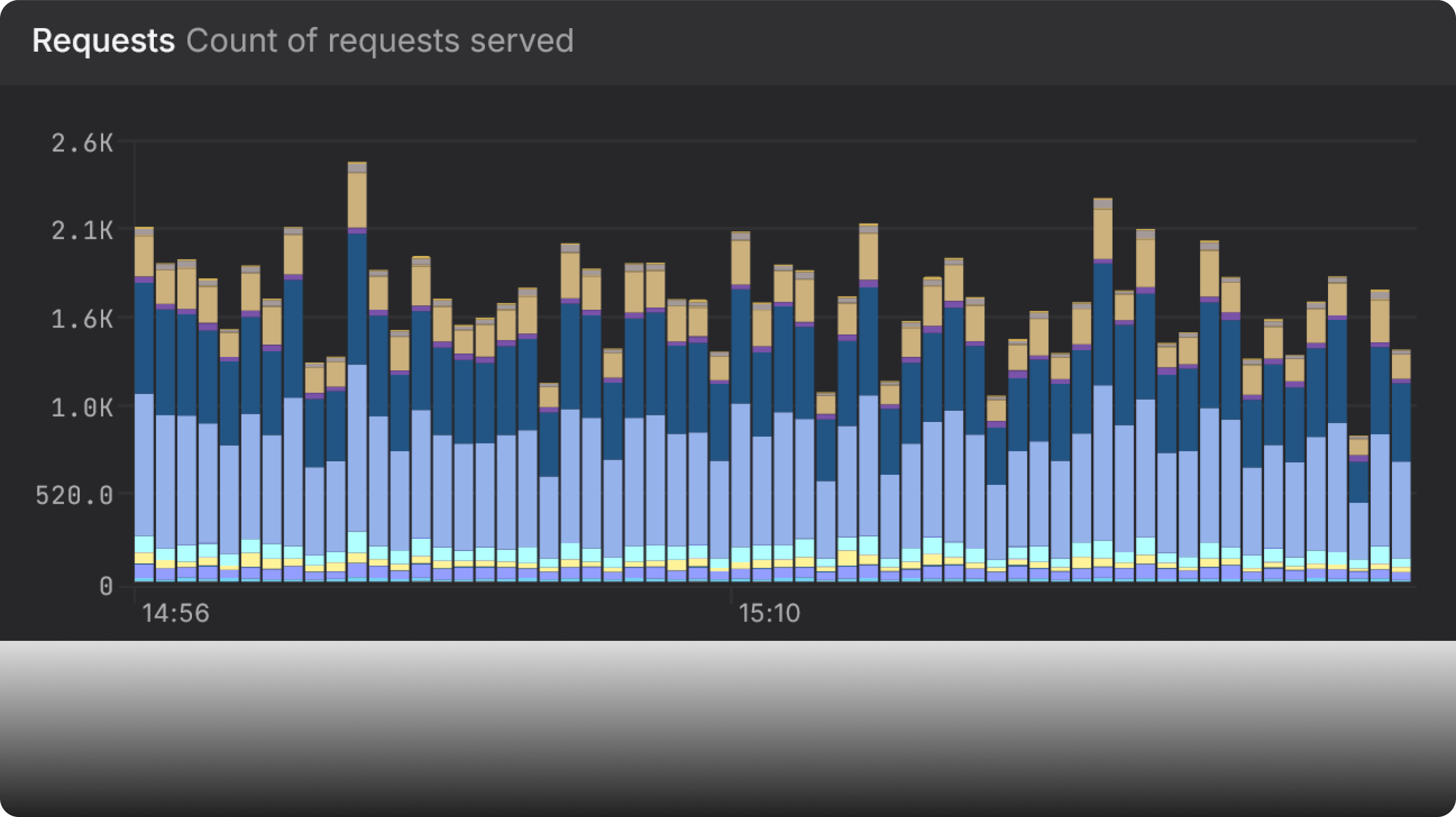
Track process RSS, GC collection counts across generations, active thread count, and CPU time. Spot memory leaks in long-running workers before they force a restart.

Dash0 acquires Polar Signals

Debug slow views, trace requests across async boundaries, and monitor background workers end to end. Built natively on OpenTelemetry with no proprietary agent or SDK.
Start for free or Book a demo


Infrastructure engineer - Chargetrip
In an age of overly complex tools, we find that Dash0 stands out for its simplicity and speed. With simple pricing, easy integration, amazing filtering capabilities, fast handling of large data volumes, and straightforward alerting with clear error messages, Dash0 makes observability a breeze.

CTO - Hayuno AG
Despite being a young company, Dash0 delivers enterprise-grade quality and features—automatic instrumentation, spans, logs with semantic context, PromQL support, AI-powered trace triage—all working reliably from day one.

Senior Full-Stack Engineer - catchHR
Dash0 has significantly streamlined our approach to observability and OpenTelemetry, bringing everything together in one place. The intuitive interface and seamless integration have enabled us to quickly gain valuable insights into our systems and resolve issues efficiently.

Senior Web Developer - CroCoder
What I love most about Dash0 is that it's fully OpenTelemetry native which has significantly improved our software development process. The seamless navigation from logs to traces to metrics streamlines bug diagnosis and troubleshooting, enhancing our team's efficiency.

Software Engineer - Vercel
The tracing UI is amazing. When we switched to Dash0, it significantly cut down the amount of time from a bug being reported to figuring out why it happened and fixing it. Filtering on attributes is extremely intuitive, and the tracing tree UI is awesome.

DevOps Cloud Architect - AV Software Solutions 360° at Bechtle
With Dash0, we have found an OpenTelemetry-native solution that provides the flexibility we need. With the support of the open standard OpenTelemetry, we are able to handle public resources responsibly.

Solution Architect - Porsche Digital
Dash0's foundation on open source standards ensures future-proof and next-gen observability. Their focus on ease of use empowers all of our developers to gain insights quickly.
Process memory, GC collections, active threads, and asyncio task counts for Python in production.
Track process RSS, GC collection counts across generations, active thread count, and CPU time. Spot memory leaks in long-running workers before they force a restart.

Distributed traces that follow context through asyncio coroutines, Celery task chains, and multi-process worker pools. You see the full flow from web handler to background job, not just the WSGI request.
Logs, traces, metrics, and alerts in one connected view. Click from one to any other.

Click from a log line to its trace, then jump from a span to the underlying metrics. Works with the standard logging module and structlog. OpenTelemetry's trace-context correlation and Dash0's resource-centric design make it automatic, no manual linking.
Define checks on Python process memory, Celery queue depth, or HTTP latency using PromQL or the query builder. Reuse open-source alert rules from Awesome Prometheus Alerts and get notified via email, Slack, or any webhook.

Install the Dash0 distro, wrap your app with opentelemetry-instrument, done. No bootstrap step, no code changes required.

Install dash0-opentelemetry, then wrap your app with opentelemetry-instrument, no separate bootstrap step needed, since every upstream instrumentation ships built in and only activates for libraries you actually have installed. Works with any WSGI or ASGI server.

The Dash0 Operator auto-instruments Python pods on Kubernetes with zero code changes. Or configure via environment variables in your Dockerfile for any deployment target.

Open-source skills for Claude Code, Cursor, Windsurf, and 38+ other AI coding agents. Correct resource attributes, span status codes, and Collector patterns from the first commit.
No proprietary agents and no vendor-specific code in your repo, just standard OpenTelemetry from instrumentation to export to query.
Dash0 is designed as an OpenTelemetry-native observability platform. Your instrumentation uses the official OTel Python SDK — semantic conventions and resource attributes preserved as-is, enabling standardized data collection across distributed systems.

Import your existing Prometheus alerts and query traces, logs, and metrics with PromQL or SQL.
Perses-compatible dashboards, PromQL alert rules, and OTel Collector configs. Everything Dash0 produces is an open-standard artifact you can commit to git.
The definitive guide to Python’s built-in logging module. Covers handlers, formatters, filters, hierarchical loggers, and integrating with OpenTelemetry for trace-correlated logs.
A practical comparison of the standard logging module, Logure, structlog, and python-json-logger. When to use each, performance benchmarks, and OpenTelemetry integration patterns.
How to configure structured JSON logging in Python for production. Covers python-json-logger setup, field customization, and integrating with OpenTelemetry for centralized observability.